Lithium cells & battery systems
Building the storage layer of the energy transition at industrial scale, from commercial and industrial (C&I) systems to grid-scale BESS platforms of up to 5.24 MWh per unit.
- €50M → €100M
- Investment (250 MWh → 2 GWh)
- €35M
- EU non-refundable funding
- 250 MWh
- Phase-one capacity (end 2026)
- 2 GWh
- Capacity by end 2027
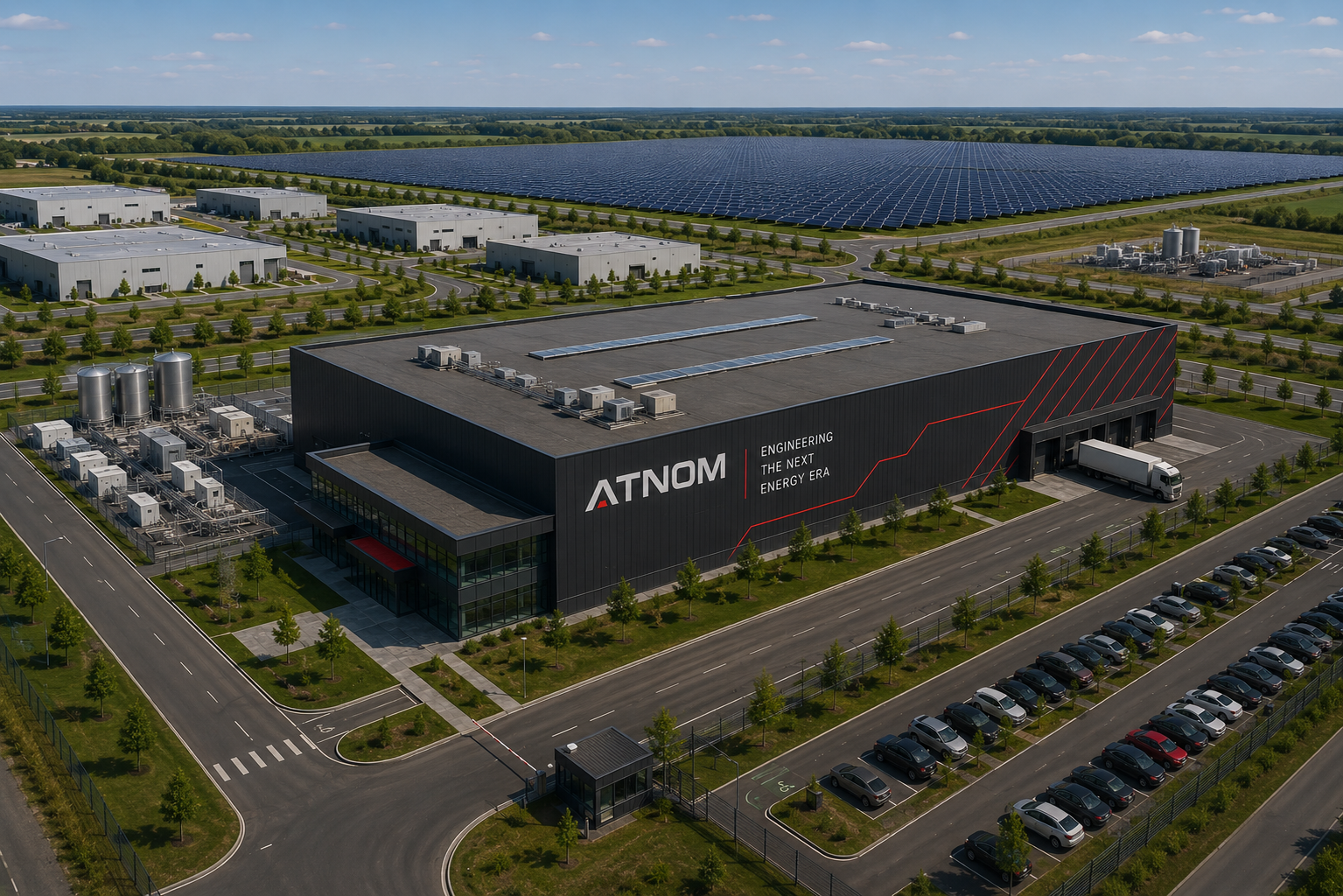
Overview
We are bringing lithium cell and battery manufacturing online with an initial €50M investment, backed by €35M in EU grant funding. Phase one reaches 250 MWh of annual production capacity by the end of 2026, and we then scale to 2 GWh by the end of 2027, taking total investment to €100M.
Everything is made in the EU to European quality and safety standards, with cyber-secure battery management systems built in from the start. That matters for grid operators and industrial customers who need storage they can trust and control.
The plant supplies battery packs and BESS platforms for commercial, industrial and grid-scale use, from smaller C&I systems up to 5.24 MWh units and beyond. These systems store renewable power, balance supply and demand, and give the wider energy transition the storage it depends on.
Current status: facility in active build, with permitting complete and core equipment on order. The project timeline is being updated following a change in its public financing under the EU PNRR programme, which is now being re-secured.
Capabilities
- EU-made lithium cells & battery packs
- Battery energy storage systems (BESS)
- Commercial & industrial (C&I) storage
- Grid-scale platforms (up to 5.24 MWh/unit)
- Cyber-secure battery management systems
- Renewable balancing & dispatchability
What ATNOM Battery Manufacturing does
Phase one
250 MWh of annual production capacity, bringing cell manufacturing online and establishing our storage supply base.
Phase two
Scaling to 2 GWh of annual capacity by the end of 2027 — a tenfold increase that positions ATNOM Battery Manufacturing for grid-scale supply.
Applications
Battery and BESS platforms for industrial, commercial and grid-scale use — storing renewable generation, balancing supply, and underpinning energy resilience.
Manufacturing the storage that makes renewable power dispatchable.